Dr. Murali Gopal
Senior Paediatrician & Paediatric Pulmonologist
MCR: 57489
MBBS, DCH(UK), MRCPCH(UK), FRCPCH(UK), CCT Paediatrics (UK),
Fellow in Paediatric Pulmonology (Aus), Allergology (Ind)
What is fever?
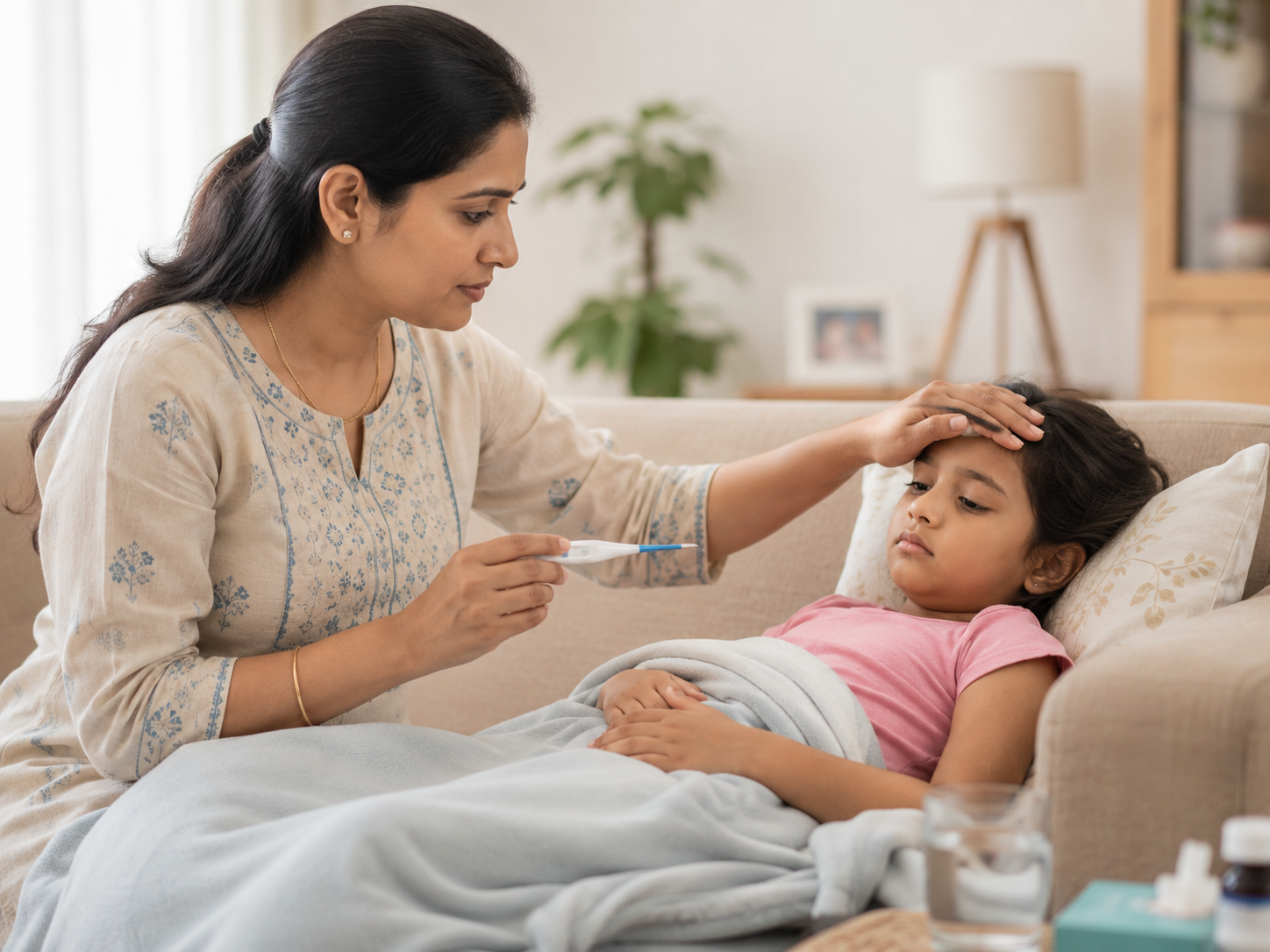
Fever means a body temperature of 38°C (100.4°F) or more. It is common in children and is usually caused by an infection. Fever itself is a sign, not a diagnosis.
Doctors are usually more interested in how the child looks and behaves than in the exact temperature number alone.
Common signs of fever
- Feeling hot to touch
- Being more tired, clingy, irritable, or less playful than usual
- Shivering or chills
- Reduced appetite
- Sweating
- Headache or body discomfort in older children
How should I check the temperature?
- Place the digital thermometer high in the armpit against bare skin and keep the arm held close to the body until the reading is complete.
- Feeling the forehead can suggest that a child may be hot, but use a thermometer when you need an actual reading.
- I do not recommend relying on forehead infrared thermometers for routine home assessment because readings can be unreliable.
- Ear / tympanic thermometers are not my preferred routine home method, especially in young infants, where readings may be less reliable.
What usually causes fever?
Fever is most often caused by infections. Viral infections are common, but some children may have bacterial infections or other illnesses that need medical review.
The presence of fever alone does not tell us whether the illness is mild or serious. The associated symptoms and the child’s overall condition matter more.
Home management
- Offer frequent fluids. Small, regular amounts may be easier than large drinks.
- Dress the child comfortably. Avoid over-wrapping or excessive blankets.
- Let the child rest, but there is no need to force bed rest if they want quiet play.
- Fever medicine may be used for discomfort if appropriate for your child, but follow the product label or your child’s doctor’s advice carefully. Do not calculate or change medicine doses yourself unless a qualified healthcare professional has advised you how.
- Do not use aspirin for children unless specifically instructed by a doctor.
- Avoid cold baths, ice packs, alcohol rubs, or repeated sponging to bring down fever.
When should I seek urgent medical care?
- Age under 3 months with a temperature of 38°C (100.4°F) or more
- Difficulty breathing, very fast breathing, or obvious increased work of breathing
- Hard to wake, unusually drowsy, confused, floppy, or not responding normally
- A seizure
- Signs of dehydration such as very dry mouth, no tears, markedly reduced urine, or refusal of fluids
- Repeated vomiting or inability to keep fluids down
- Stiff neck, severe headache, or severe pain
- A new unexplained rash, especially purple or blood-coloured spots
- The child looks very unwell, is worsening, or you are seriously worried
Seek medical advice as well if the fever is not improving, lasts more than a few days, or if you are unsure how unwell your child is.
Important facts for parents
- A higher temperature number does not always mean a more serious illness.
- Fever is common and often improves as the underlying infection settles.
- The main reason to treat fever is to improve comfort, not just to lower the number.
- Children can become unwell quickly, so trust your judgement if something feels wrong.
Medical disclaimer
References
- Indian Academy of Pediatrics. Guidelines for Fever. Guidelines for Parents. Accessed 10 May 2026.
- Indian Academy of Pediatrics. Standard Treatment Guideline 146: Management of Fever without Focus in Office Practice. Accessed 10 May 2026.
- Indian Council of Medical Research. Standard Treatment Workflow: Fever in Children. Accessed 10 May 2026.
- Royal Children’s Hospital Melbourne. Fever in children. Accessed 10 May 2026.
- National Institute for Health and Care Excellence. Fever in under 5s: assessment and initial management (NG143). Last reviewed 30 April 2025.
- American Academy of Pediatrics. Fever Without Fear: Information for Parents. Last updated 23 September 2025.
- American Academy of Pediatrics. Best Ways to Take a Temperature. Last updated 23 December 2025.
- American Academy of Pediatrics. Treating Your Child’s Fever. Accessed 10 May 2026.
Last reviewed: 10 May 2026.
© Dr. Murali Gopal | For Patient Education Only This educational material is intended for parent and patient education. Reproduction, redistribution, or modification without permission is not allowed.
Medical review and references

Scan to open the latest online version