Dr. Murali Gopal
Senior Paediatrician & Paediatric Pulmonologist
MCR: 57489
MBBS, DCH(UK), MRCPCH(UK), FRCPCH(UK), CCT Paediatrics (UK),
Fellow in Paediatric Pulmonology (Aus), Allergology (Ind)
Last reviewed: 16 June 2026
What is it?
Meningitis is inflammation or infection around the brain and spinal cord. It can be caused by different infections, and some forms can become serious quickly.
Symptoms vary by age and may not all appear together. A very unwell child needs urgent assessment even if the picture is not complete.
Symptoms and signs
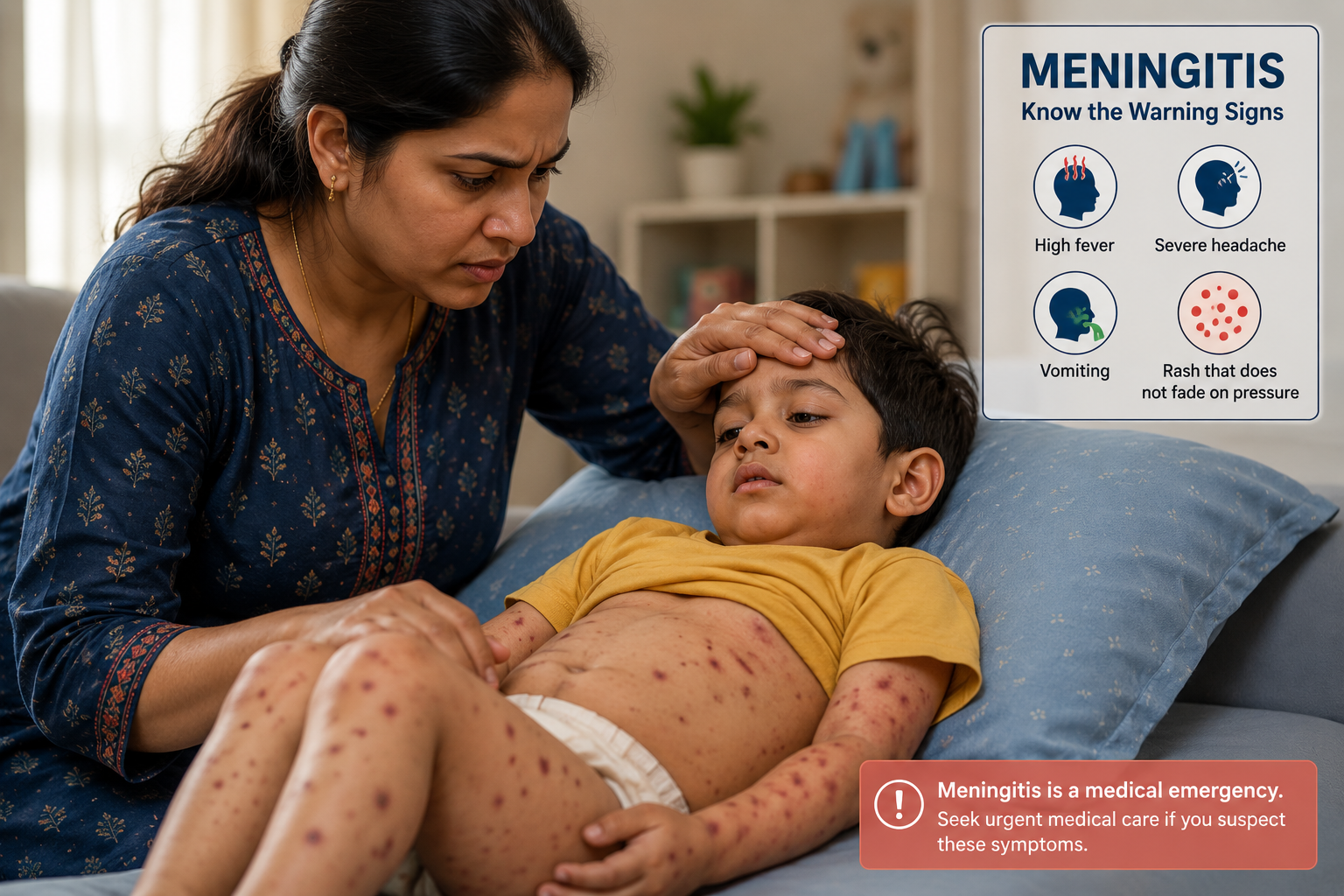
- Fever, severe headache, neck stiffness, vomiting, or sensitivity to light.
- Drowsiness, confusion, irritability, or difficult to wake.
- Seizure, breathing difficulty, cold hands or feet, or mottled appearance.
- Non-blanching rash or purple spots may occur, but absence of rash does not exclude meningitis.
- Babies may have poor feeding, high-pitched cry, bulging fontanelle, floppiness, or marked irritability.
Common causes and spread
- Meningitis can be caused by bacterial or viral infections and needs medical assessment.
- Some infections spread through close contact, respiratory droplets, or contact with secretions.
- Vaccination helps prevent some serious causes, but no vaccine prevents every possible cause.
- Doctors decide testing, treatment, and contact precautions after assessment.
Home management
- There is no safe home-observation-first plan if meningitis is suspected.
- Arrange urgent medical care immediately if your child looks seriously unwell or has red flags.
- Keep the child safe and comfortable while arranging transport for urgent assessment.
- Tell the medical team clearly about fever, rash, drowsiness, seizure, vomiting, neck pain, and recent illness.
- Follow hospital or doctor advice about treatment, observation, tests, follow-up, and school return.
What to avoid
- Do not wait for all classic symptoms to appear.
- Do not wait for a rash; meningitis can occur without a rash.
- Do not delay care for home observation if the child is very unwell.
- Do not self-start antibiotics without medical care.
- Do not send a child with suspected meningitis to school or daycare.
School and daycare guidance
A child with suspected meningitis needs urgent medical assessment, not school or daycare. Return should follow doctor, hospital, and public health advice because guidance depends on the cause, recovery, and contact precautions.
Important facts
- Meningitis can progress quickly and needs urgent assessment when suspected.
- A rash is not always present, and waiting for rash can delay care.
- Babies and young children may show non-specific signs such as poor feeding, irritability, floppiness, or drowsiness.
- Early medical assessment is the safest path when a child looks seriously unwell.
Red flags / when to seek urgent medical care
- Very drowsy, confused, difficult to wake, or child looks seriously unwell.
- Stiff neck, severe headache, seizure, or breathing difficulty.
- Non-blanching rash, purple spots, persistent vomiting, or mottled appearance.
- Baby with poor feeding, bulging fontanelle, high-pitched cry, floppiness, or marked irritability.
- Fever with sensitivity to light, cold hands or feet, worsening weakness, or parent is worried.
Medical disclaimer
References
- RCH Kids Health Info. Meningitis. Accessed 21 May 2026.
- NHS. Meningitis guidance. Accessed 21 May 2026.
- Centers for Disease Control and Prevention. Meningitis information. Accessed 21 May 2026.
- NICE. Fever in under 5s guidance. Accessed 21 May 2026.
Last reviewed: 16 June 2026.
© Dr. Murali Gopal | For Patient Education Only This educational material is intended for parent and patient education. Reproduction, redistribution, or modification without permission is not allowed.
Medical review

Scan to open the latest online version