Dr. Murali Gopal
Senior Paediatrician & Paediatric Pulmonologist
MCR: 57489
MBBS, DCH(UK), MRCPCH(UK), FRCPCH(UK), CCT Paediatrics (UK),
Fellow in Paediatric Pulmonology (Aus), Allergology (Ind)
Last reviewed: 28 May 2026
What is it?
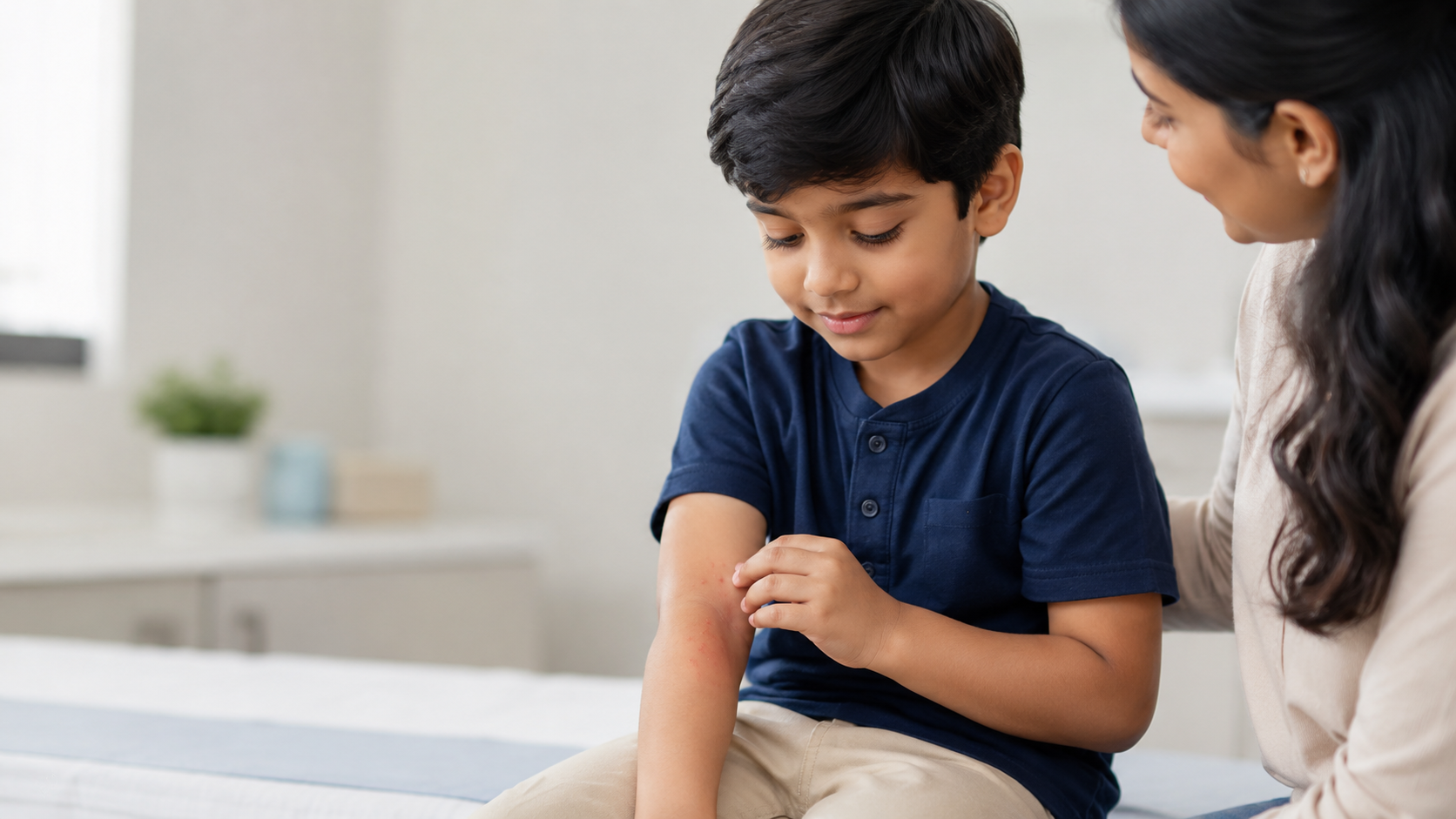
Hives, also called urticaria, are raised itchy patches or wheals on the skin. They may look like mosquito bites, join together into larger patches, move around the body, and fade without leaving marks.
Most short episodes settle over hours to days. A doctor can help if hives keep recurring, last for weeks, or happen with other symptoms.
Symptoms and signs
- Raised red, pink, or skin-coloured wheals.
- Itching, stinging, or a burning feeling.
- Rash that appears, fades, and returns in different areas.
- Swelling around eyelids or lips can occur, but needs careful monitoring.
- Wheals usually fade without scarring, bruising, or peeling.
Common triggers and causes
- Viral infections are a common trigger in children.
- Foods, medicines, insect stings, or latex can trigger allergic hives in some children.
- Heat, sweating, pressure from clothing, cold, sunlight, or exercise may worsen hives in some children.
- Often, no single trigger is found, especially when hives are short-lived.
Home management
- Keep your child cool and avoid hot baths or showers during a flare.
- Use cool compresses for itching if your child finds them soothing.
- Avoid a clear trigger if one has been identified, such as a recent food, medicine, or sting exposure.
- Ask your doctor or pharmacist before using antihistamine medicines, especially for young children or children with other health conditions.
- Take photos of the rash if it comes and goes before the clinic visit.
When to see a doctor
- Hives keep coming back or last more than a few days.
- Hives started soon after a new medicine, food, insect sting, or vaccination.
- Your child has fever, joint pain, bruising, purple marks, or looks unwell.
- The rash leaves marks, blisters, peeling, or painful areas.
- You are unsure whether the rash is hives.
Do's and don'ts
- Do keep the child comfortable, cool, and well hydrated.
- Do write down possible triggers and timing if hives recur.
- Do not assume every episode of hives is food allergy.
- Do not restart a suspected medicine until a doctor has advised you.
- Do not use multiple medicines or home remedies without medical advice.
School and daycare guidance
Hives themselves are not contagious. A child who feels well can usually attend school or daycare, but keep them home and seek advice if they are unwell, have fever, or have symptoms suggesting an allergic emergency.
Red flags / urgent care advice
- Breathing difficulty, wheeze, noisy breathing, or persistent cough.
- Swelling of the face, lips, tongue, throat, or tightness in the throat.
- Dizziness, fainting, collapse, pale or floppy appearance, or confusion.
- Repeated vomiting, severe abdominal pain, or vomiting with other allergy symptoms.
- Rapidly worsening symptoms after food, medicine, insect sting, or known allergen exposure.
Medical disclaimer
References
- RCH Kids Health Info. Hives. Accessed 21 May 2026.
- NHS. Urticaria. Accessed 21 May 2026.
- American Academy of Dermatology. Hives information. Accessed 21 May 2026.
- HealthyChildren.org. Hives and allergy information. Accessed 21 May 2026.
Last reviewed: 28 May 2026. Status: published, clinician reviewed.
Medical review and references

Scan to open the latest online version
© Dr. Murali Gopal | For Patient Education Only This educational material is intended for parent and patient education. Reproduction, redistribution, or modification without permission is not allowed.