Dr. Murali Gopal
Senior Paediatrician & Paediatric Pulmonologist
MCR: 57489
MBBS, DCH(UK), MRCPCH(UK), FRCPCH(UK), CCT Paediatrics (UK),
Fellow in Paediatric Pulmonology (Aus), Allergology (Ind)
Last reviewed: 29 May 2026
Reassurance for parents
Eczema is a common long-term skin condition in children. It tends to flare and settle over time, but regular skin care can make a big difference.
What is Eczema (Atopic Dermatitis)?
Eczema, also called atopic dermatitis, causes dry, red, itchy, inflamed skin. The skin barrier is sensitive and loses moisture easily.
Symptoms & Signs
- Dry, itchy skin
- Red or inflamed patches
- Scratching, especially at night
- Often affects cheeks, neck, elbow creases, and behind the knees
- Sometimes cracked, weeping, or crusted skin
Causes
- A combination of sensitive skin, family tendency, and environmental triggers
- Common triggers include soaps, heat, sweat, rough fabrics, and viral illnesses
- Eczema is not contagious
Home Management
- Apply moisturiser generously and often, even when the skin looks better.
- Use gentle, fragrance-free skin products.
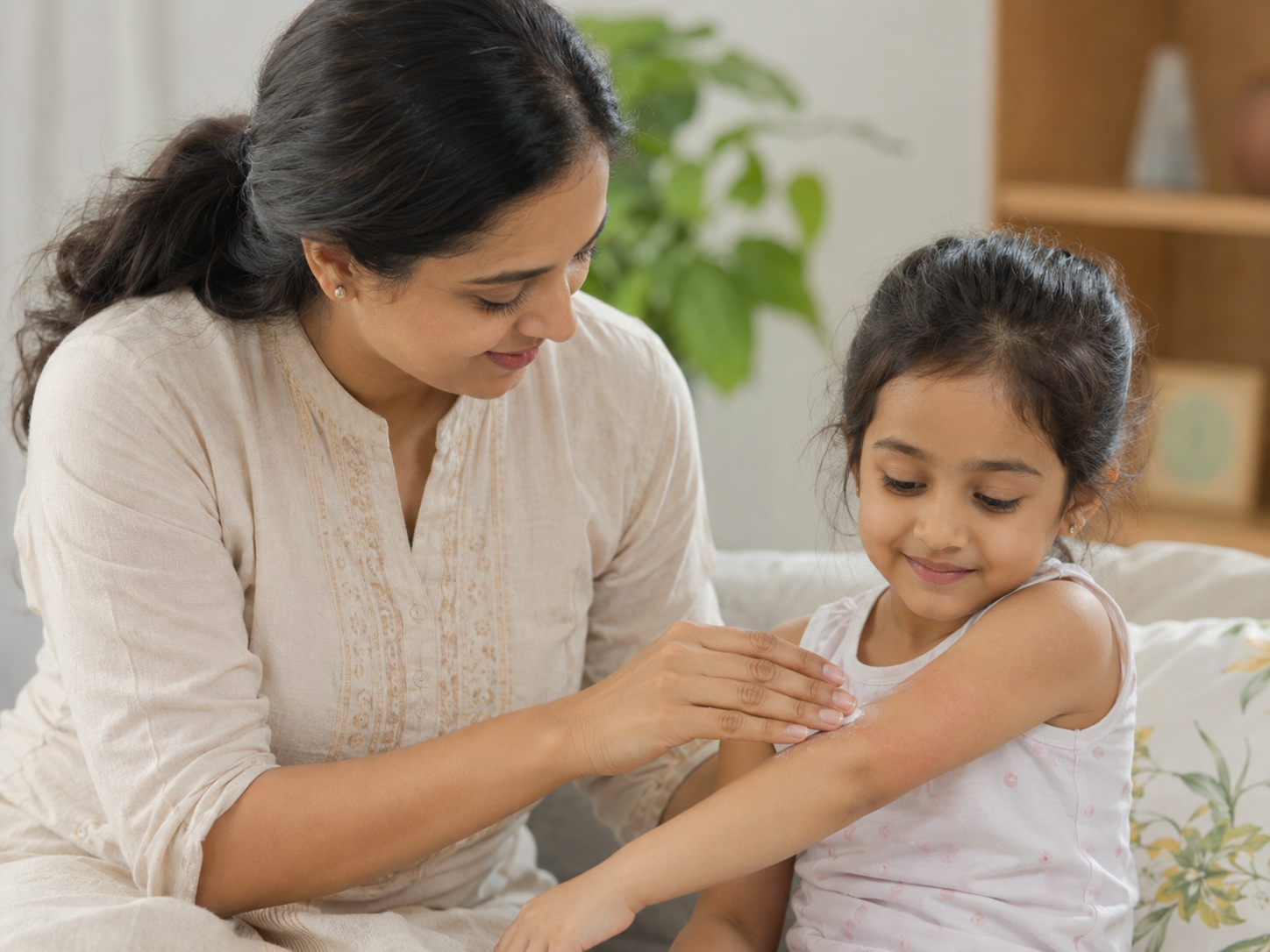
- Give short lukewarm baths and apply moisturiser soon after drying.
- Use any prescribed anti-inflammatory creams only as your doctor has advised.
- Keep nails short and use soft cotton clothing.
Red Flags / When to Seek Help
- Skin becomes painful, weepy, or crusted
- Fever or signs of skin infection
- Child is not sleeping or is very distressed by itching
- Worsening eczema despite the usual care already advised
Important Facts / Myth correction
- Eczema cannot spread from one child to another.
- Regular moisturising can help protect the skin barrier.
- Many children improve with age, although flares can still happen.
Legal medical disclaimer
This parent guide is for education only and does not replace a medical consultation, diagnosis, or treatment plan. Advice should be interpreted in the context of your child's age, symptoms, and medical history. If your child has worsening symptoms, breathing difficulty, dehydration, unusual drowsiness, persistent high fever, seizures, or any emergency warning signs, seek urgent medical care immediately. All final guides should be reviewed by a qualified medical professional before clinical use.
References
- Royal Children’s Hospital Melbourne. Kids Health Info: Eczema (atopic dermatitis). https://www.rch.org.au/kidsinfo/fact_sheets/eczema/
Medical review and references

Scan to open the latest online version
© Dr. Murali Gopal | For Patient Education Only This educational material is intended for parent and patient education. Reproduction, redistribution, or modification without permission is not allowed.