Dr. Murali Gopal
Senior Paediatrician & Paediatric Pulmonologist
MCR: 57489
MBBS, DCH(UK), MRCPCH(UK), FRCPCH(UK), CCT Paediatrics (UK),
Fellow in Paediatric Pulmonology (Aus), Allergology (Ind)
Last reviewed: 28 May 2026
What is it?
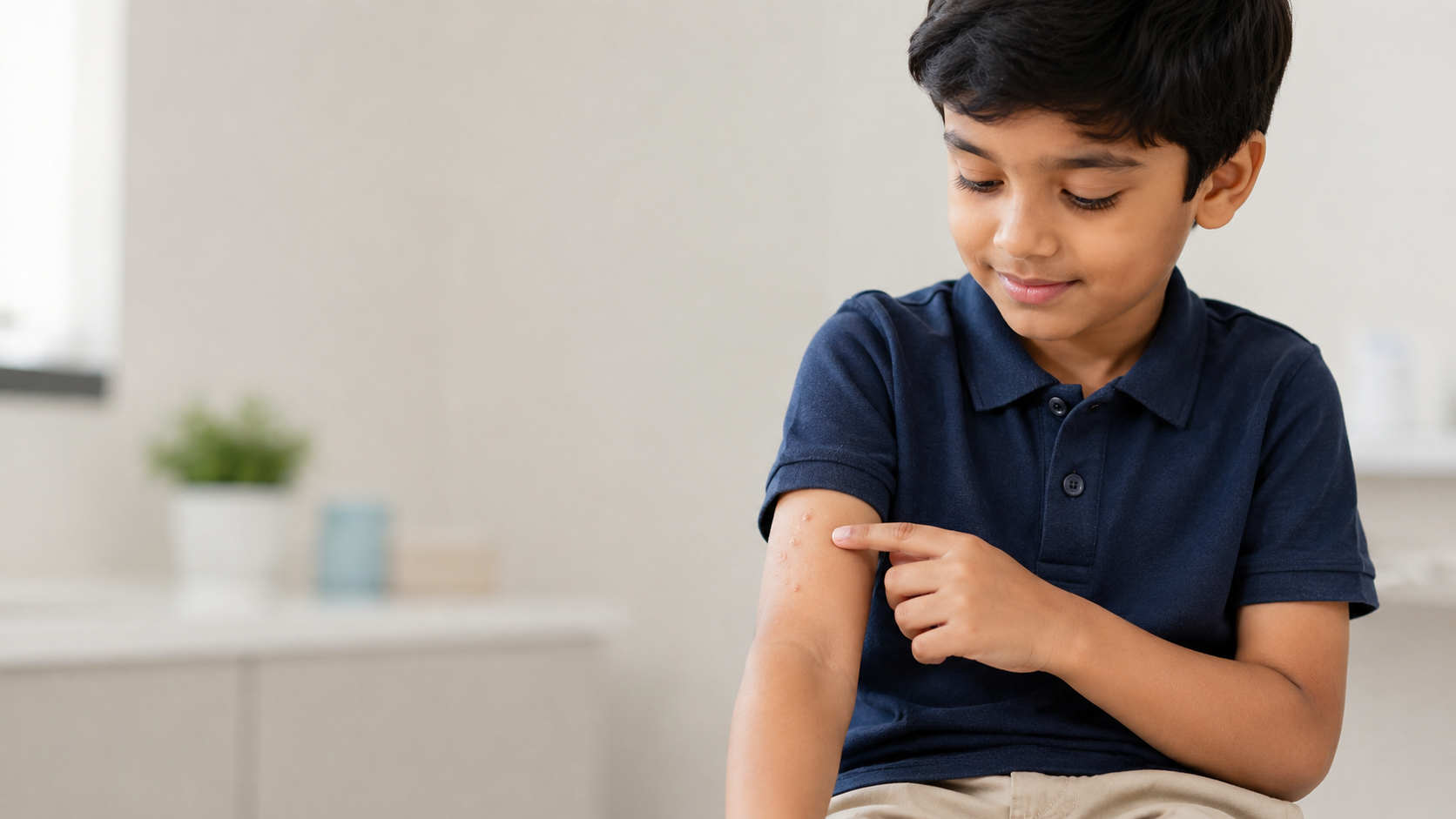
Molluscum contagiosum is a common viral skin infection that causes small, smooth, raised bumps. Many bumps have a tiny central dimple.
It is usually self-limiting, which means the immune system gradually clears it. This can take many months, so the main goal is preventing irritation, scratching, and spread.
Symptoms and signs
- Small pearly, pink, white, or skin-coloured bumps.
- A tiny central dimple may be visible.
- Often appears on the trunk, arms, legs, armpits, or folds.
- Usually painless, though bumps can become itchy, red, or inflamed.
- Scratching can spread bumps to nearby skin and may cause infection.
How it spreads
- Direct skin-to-skin contact with molluscum bumps.
- Touching or scratching bumps and then touching another area of skin.
- Sharing towels, clothing, bath items, or sports contact surfaces.
- Children with eczema may be more prone to irritation and wider spread.
Home management
- Discourage scratching or picking; keep nails short.
- Cover bumps with clothing or a light dressing if they are being scratched or rubbed.
- Do not share towels, clothing, or bath items during active spread.
- Use gentle skin care and moisturiser if the child also has eczema or dry skin.
- Seek advice before using creams, procedures, or home remedies on the bumps.
When to see a doctor
- Bumps become painful, hot, very red, swollen, crusted, or have pus.
- Bumps are near the eye or eyelid.
- The rash is widespread, rapidly increasing, or causing distress.
- Your child has eczema that is flaring around the bumps.
- Your child has a weak immune system or significant chronic illness.
- The diagnosis is uncertain or lesions look unusual.
Do's and don'ts
- Do reassure your child that molluscum is common and not their fault.
- Do keep skin comfortable and reduce scratching.
- Do check for eczema flare or infection signs.
- Do not squeeze, scrape, or pick the bumps at home.
- Do not use harsh chemicals, wart acids, or unverified remedies without medical advice.
School and daycare guidance
Most children with molluscum can attend school or daycare if they feel well. Cover bumps where practical, avoid sharing towels, and follow local school or daycare policy for swimming, contact sport, or open irritated lesions.
Red flags / urgent care advice
- Fever, your child looks unwell, or redness is rapidly spreading around bumps.
- Painful swelling, pus, honey-coloured crusting, or worsening sores.
- Eye pain, eyelid swelling, red eye, or bumps very close to the eye.
- Widespread severe lesions in a child with eczema or immune suppression.
- You are worried or feel something is seriously wrong.
Medical disclaimer
References
- RCH Kids Health Info. Molluscum. Accessed 21 May 2026.
- NHS. Molluscum contagiosum. Accessed 21 May 2026.
- Centers for Disease Control and Prevention. Molluscum contagiosum. Accessed 21 May 2026.
- American Academy of Dermatology. Molluscum contagiosum information. Accessed 21 May 2026.
Last reviewed: 28 May 2026. Status: published, clinician reviewed.
Medical review and references

Scan to open the latest online version
© Dr. Murali Gopal | For Patient Education Only This educational material is intended for parent and patient education. Reproduction, redistribution, or modification without permission is not allowed.