Dr. Murali Gopal
Senior Paediatrician & Paediatric Pulmonologist
MCR: 57489
MBBS, DCH(UK), MRCPCH(UK), FRCPCH(UK), CCT Paediatrics (UK),
Fellow in Paediatric Pulmonology (Aus), Allergology (Ind)
Last reviewed: 28 May 2026
What is it?
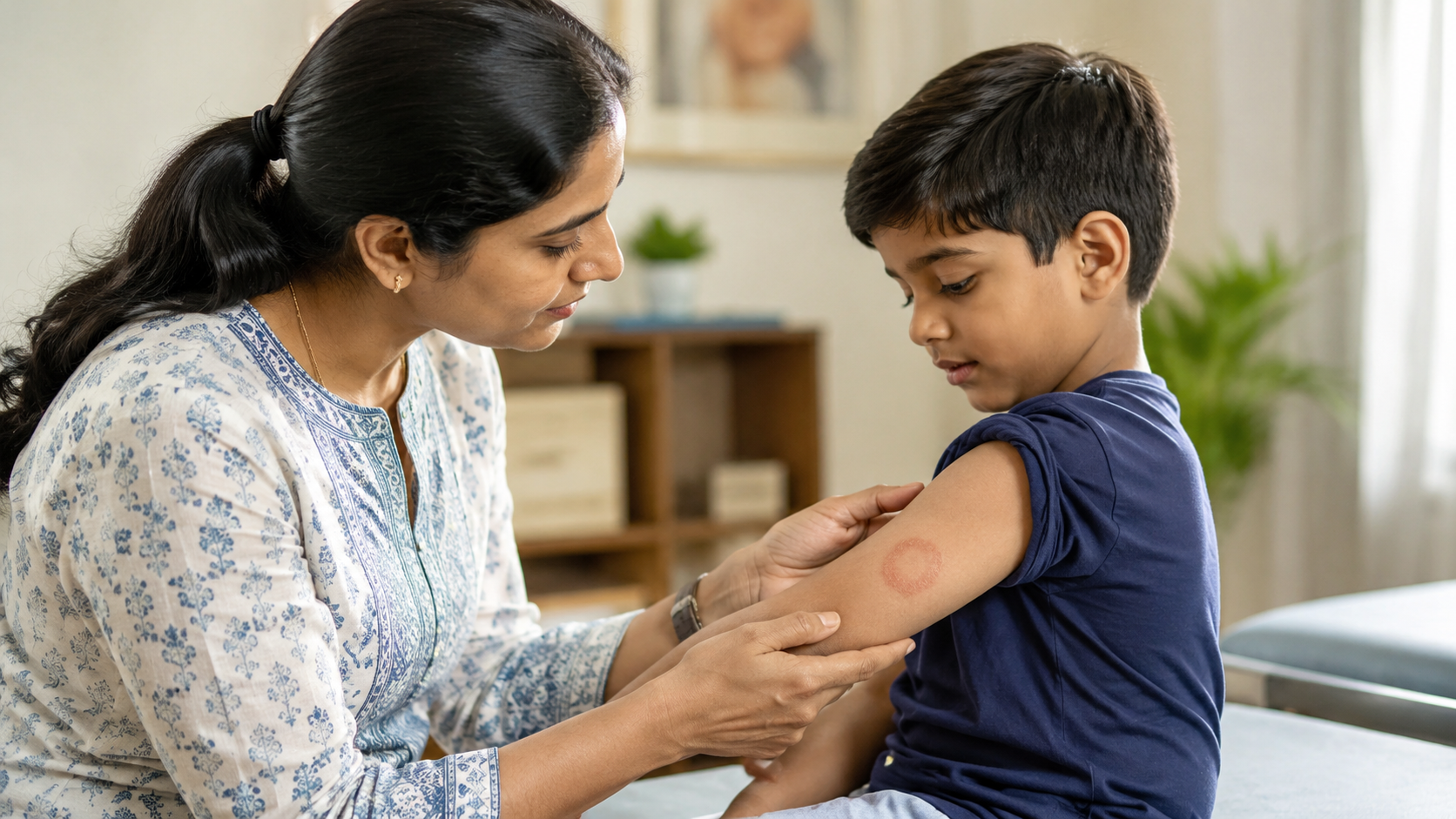
Ringworm, also called tinea, is a fungal infection of the skin. It can affect body skin, scalp, groin, feet, or nails.
Despite the name, ringworm is not caused by a worm. On body skin it often forms a round or ring-shaped patch with a scaly edge and a clearer centre.
Symptoms and signs
- Round or ring-shaped rash with a raised or scaly edge.
- Clearer-looking centre with a more active outer border.
- Itching, dryness, flaking, or mild irritation.
- Scalp ringworm may cause scaling, broken hairs, hair loss patches, or tender swelling.
- Tinea can also affect groin, feet, or nails.
How it spreads
- Skin contact with an infected person.
- Sharing towels, clothes, combs, caps, bedding, or sports gear.
- Contact with contaminated floors, mats, or surfaces.
- Pets can sometimes spread fungal infection, especially if they have patches of hair loss.
Home management
- Arrange medical review if the rash is on the scalp, face, widespread, recurrent, uncertain, painful, or not improving.
- Keep skin clean and dry.
- Avoid sharing towels, combs, caps, clothing, or bedding.
- Wash clothes and towels regularly and dry them well.
- Pets with patches of hair loss should be checked by a veterinarian.
- Use treatment only as advised by a doctor or pharmacist for the child's specific rash.
What to avoid
- Do not use steroid-mixed creams without medical advice, because they can worsen or mask fungal infection.
- Do not assume every circular rash is ringworm; eczema and other rashes can look similar.
- Do not share towels, combs, caps, or clothing.
- Do not delay review for scalp infection, painful swelling, pus, or rash near the eye.
School and daycare guidance
Follow local school or daycare policy. A child can often attend once treatment has started and lesions are covered where practical, but scalp or widespread infection needs doctor advice.
Important facts
- Ringworm is a fungal infection, not a worm infestation.
- Scalp ringworm usually needs medical care and is different from a small body patch.
- Steroid-mixed creams can make fungal rashes harder to recognize and treat.
- Household items and pets may need attention if infections recur.
Red flags / when to seek medical care
- Scalp involvement, broken hairs, hair loss patches, or tender swelling.
- Painful swelling, pus, fever, or your child seems unwell.
- Rapidly spreading rash, rash near the eye, or widespread rash.
- Child has a weak immune system or significant chronic illness.
- Rash is recurrent, uncertain, or not improving with treatment.
- You are worried or feel something is seriously wrong.
Medical disclaimer
References
- RCH Kids Health Info. Ringworm. Accessed 20 May 2026.
- NHS. Ringworm. Accessed 20 May 2026.
- Centers for Disease Control and Prevention. Fungal diseases: ringworm. Accessed 20 May 2026.
- DermNet. Tinea information. Accessed 20 May 2026.
Last reviewed: 28 May 2026. Status: published, clinician reviewed.
Medical review and references

Scan to open the latest online version
© Dr. Murali Gopal | For Patient Education Only This educational material is intended for parent and patient education. Reproduction, redistribution, or modification without permission is not allowed.