Dr. Murali Gopal
Senior Paediatrician & Paediatric Pulmonologist
MCR: 57489
MBBS, DCH(UK), MRCPCH(UK), FRCPCH(UK), CCT Paediatrics (UK),
Fellow in Paediatric Pulmonology (Aus), Allergology (Ind)
Last reviewed: 28 May 2026
What is it?
Head lice are tiny insects that live on the human scalp and hair. Their eggs are called nits and are attached to hair shafts.
Lice crawl from head to head during close contact. They do not fly or jump, and human head lice are not spread by pets.
Symptoms and signs
- Itchy scalp, especially behind the ears or at the back of the neck.
- Tickling or crawling sensation in the hair.
- Live lice moving in the hair or on the comb.
- Nits attached firmly to hair shafts close to the scalp.
- Scratch marks, small sores, or mild scalp irritation.
How it spreads
- Mainly through head-to-head contact during play, school, sleepovers, or close family contact.
- Less commonly through sharing combs, hair accessories, caps, scarves, pillows, or towels.
- Lice survive poorly away from the human scalp.
- Head lice are not caused by dirty hair or poor parenting.
Home management
- Check hair in good light, especially behind the ears and near the neck.
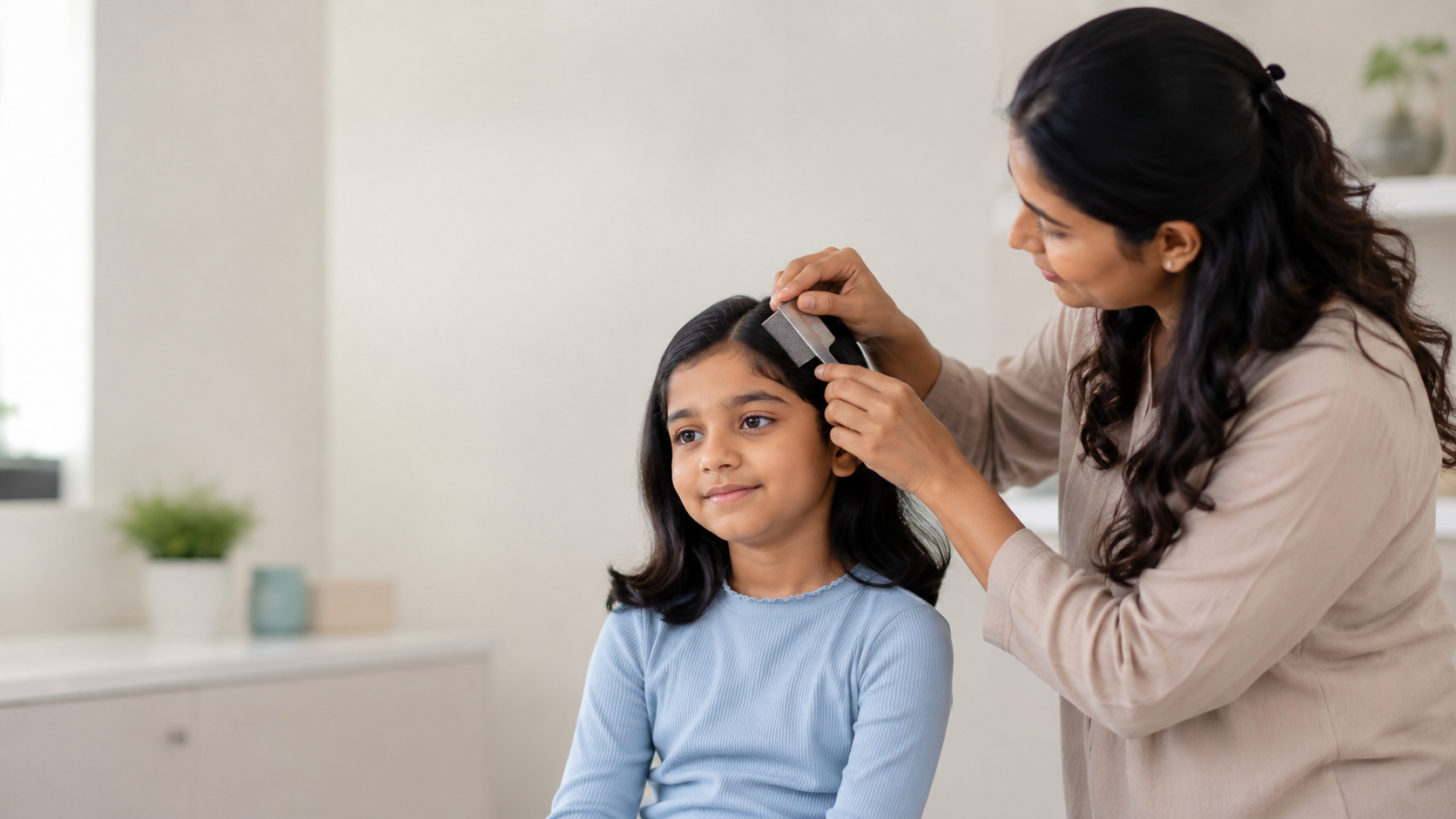
- Wet combing with conditioner and a fine-tooth lice comb can help find and remove live lice.
- Use appropriate head lice treatment only as advised by a doctor or pharmacist, and follow the product instructions carefully.
- Repeat checking and combing as advised because eggs may hatch after the first check or treatment.
- Check close household contacts, but avoid treating people who do not have live lice unless advised.
- Wash pillowcases, recently used towels, caps, and hair accessories as practical; major house fumigation is not needed.
When to see a doctor
- Scalp becomes painful, swollen, oozing, crusted, or infected.
- Your child has significant sores from scratching.
- Lice persist despite careful combing and correctly used treatment.
- Your child has eczema, scalp disease, allergies to products, or very sensitive skin.
- You are unsure whether what you see is lice, dandruff, or another scalp condition.
Do's and don'ts
- Do speak calmly and avoid blaming or embarrassing the child.
- Do comb carefully in sections and clean the comb between passes.
- Do inform close contacts or school if local policy asks for it.
- Do not use insect sprays, kerosene, harsh chemicals, or unsafe home remedies.
- Do not shave the child's head for lice unless the family chooses it for other reasons.
- Do not keep repeating products without advice if lice persist.
School and daycare guidance
Follow local school or daycare policy. Many children can return after appropriate checking and treatment has started. Avoid shaming, public identification, or exclusion longer than local guidance requires.
Red flags / urgent care advice
- Fever, your child seems unwell, or redness is spreading on the scalp.
- Painful swelling, pus, crusting, or tender glands in the neck.
- Severe skin reaction after applying a lice product.
- Eye exposure to a lice product or accidental swallowing of a product.
- You are worried or feel something is seriously wrong.
Medical disclaimer
References
- RCH Kids Health Info. Head lice and nits. Accessed 21 May 2026.
- NHS. Head lice and nits. Accessed 21 May 2026.
- Centers for Disease Control and Prevention. Head lice. Accessed 21 May 2026.
- HealthyChildren.org. Head lice information. Accessed 21 May 2026.
Last reviewed: 28 May 2026. Status: published, clinician reviewed.
Medical review and references

Scan to open the latest online version
© Dr. Murali Gopal | For Patient Education Only This educational material is intended for parent and patient education. Reproduction, redistribution, or modification without permission is not allowed.