Dr. Murali Gopal
Senior Paediatrician & Paediatric Pulmonologist
MCR: 57489
MBBS, DCH(UK), MRCPCH(UK), FRCPCH(UK), CCT Paediatrics (UK),
Fellow in Paediatric Pulmonology (Aus), Allergology (Ind)
Last reviewed: 16 June 2026
What is it?
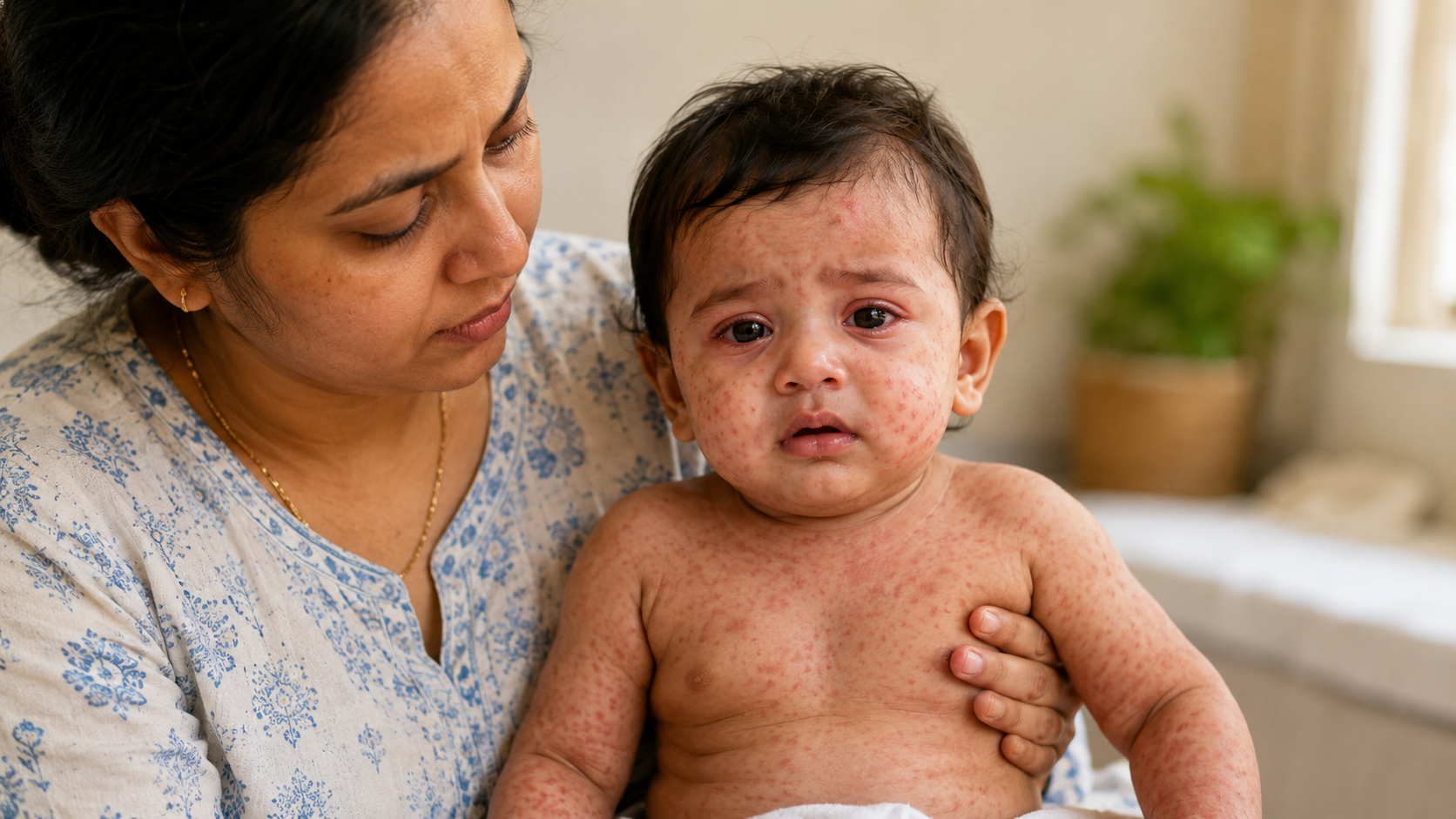
Measles is a highly contagious viral infection. It can cause fever, cough, runny nose, red eyes, tiredness, and a widespread rash.
Measles is vaccine-preventable. Parents should check their child vaccination record with their paediatrician, especially if there has been contact with a suspected case or a local outbreak alert.
Symptoms and signs
- Fever, tiredness, irritability, body aches, or poor appetite.
- Cough, runny nose, sneezing, and red or watery eyes.
- Small mouth spots may be noticed by a doctor during examination.
- A rash that becomes widespread, often with the child looking unwell.
- Some children also develop diarrhoea, ear pain, vomiting, or dehydration.
How it spreads
- Measles spreads through respiratory droplets and airborne spread from coughing or sneezing.
- It can spread quickly at home, school, daycare, clinics, and crowded indoor settings.
- Infants, malnourished children, pregnant contacts, and immunocompromised contacts need extra protection and prompt medical advice after exposure.
Home management
- Medical review is important if measles is suspected; call ahead before attending any clinic or hospital area.
- Keep the child away from school, daycare, visitors, and vulnerable contacts as advised by the doctor or public health guidance.
- Offer fluids often and encourage rest in a comfortable, well-ventilated room.
- Use fever comfort measures only as advised by your doctor.
- Monitor breathing, hydration, alertness, rash progression, eye symptoms, and fever.
What to avoid
- Do not send a child to school or daycare if measles is suspected.
- Do not ignore fever with rash, cough, and red eyes.
- Do not self-medicate with antibiotics; measles itself is viral.
- Do not delay medical advice if the child is very unwell or red flags appear.
- Do not bring the child into a crowded waiting room without calling ahead first.
School and daycare guidance
Keep the child away from school, daycare, group classes, and vulnerable contacts for the period advised by the doctor or local public health guidance. Inform the school or daycare so they can follow their infection-control policy and protect exposed children.
Important facts
- Measles is not just a simple rash illness; it can be serious in some children.
- Possible complications include ear infection, pneumonia, diarrhoea, dehydration, and rarely brain inflammation.
- Vaccination is the best protection, but this guide does not replace an individualized vaccination review with your paediatrician.
- Antibiotics do not treat measles itself, though a doctor may treat complications if they occur.
Red flags / when to seek urgent medical care
- Breathing difficulty, fast breathing, chest indrawing, blue lips, or severe weakness.
- Drowsiness, confusion, seizure, stiff neck, or difficult to wake.
- Poor drinking, repeated vomiting, very reduced urine, or other dehydration signs.
- Persistent high fever, worsening cough, or child looking very unwell.
- Eye pain, reduced vision, severe eye redness, or marked light sensitivity.
- Baby, immunocompromised child, significant chronic illness, or parent is worried.
Medical disclaimer
References
- RCH Kids Health Info. Measles. Accessed 21 May 2026.
- World Health Organization. Measles fact sheet. Accessed 21 May 2026.
- Centers for Disease Control and Prevention. Measles parent information. Accessed 21 May 2026.
- American Academy of Pediatrics HealthyChildren. Measles guidance. Accessed 21 May 2026.
Last reviewed: 16 June 2026.
© Dr. Murali Gopal | For Patient Education Only This educational material is intended for parent and patient education. Reproduction, redistribution, or modification without permission is not allowed.
Medical review

Scan to open the latest online version