Dr. Murali Gopal
Senior Paediatrician & Paediatric Pulmonologist
MCR: 57489
MBBS, DCH(UK), MRCPCH(UK), FRCPCH(UK), CCT Paediatrics (UK),
Fellow in Paediatric Pulmonology (Aus), Allergology (Ind)
Last reviewed: 2 July 2026
What is dengue fever?
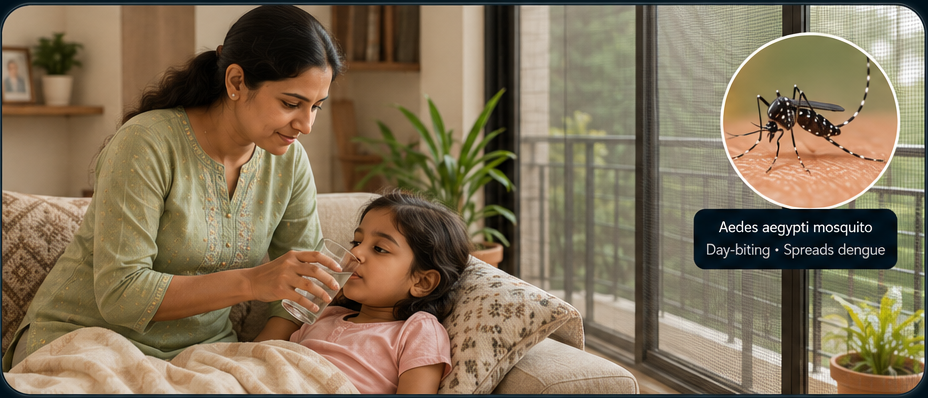
Dengue is a viral infection spread by Aedes mosquitoes. Many children recover with careful monitoring, but some develop plasma leakage, bleeding or shock. Parent education is mainly about hydration, follow-up and red-flag recognition.
Common symptoms and signs
- Sudden fever, headache, eye pain, body ache or tiredness.
- Nausea, vomiting, abdominal pain or poor appetite.
- Rash may appear as fever settles.
- The warning phase may occur around the time fever comes down.
How it spreads or happens
- Bite of infected Aedes mosquitoes, which often bite during daytime.
- Mosquito breeding in clean stagnant water around homes and schools.
- Prior dengue infection does not guarantee safety from future dengue.
Home care while arranging appropriate review
- Encourage oral fluids and continue age-appropriate food as tolerated.
- Follow the doctor's advice on review visits and blood tests.
- Use only fever medicine advised by the treating doctor; avoid aspirin or ibuprofen unless specifically advised.
- Reduce mosquito breeding: empty standing water, cover containers and use protection.
Red flags / when to seek urgent medical care
- Severe abdominal pain or persistent vomiting.
- Bleeding from nose or gums, black stools, blood in vomit, unusual bruising or heavy menstrual bleeding.
- Extreme sleepiness, restlessness, fainting, cold hands or feet, or dizziness.
- Breathing difficulty, swollen abdomen, very little urine or worsening after fever settles.
Important facts for parents
- The period when fever reduces can still be risky in dengue.
- Platelet count alone does not decide severity; the child's condition and warning signs matter.
- Dengue treatment is supportive; unnecessary injections and self-medication can be harmful.
Medical disclaimer
References
- Indian Academy of Pediatrics. Standard Treatment Guidelines. https://iapindia.org/standard-treatment-guidelines/
- National Centre for Vector Borne Diseases Control, MoHFW. National Guidelines for Clinical Management of Dengue Fever 2023. https://ncvbdc.mohfw.gov.in/
- World Health Organization disease fact sheets and public-health guidance. https://www.who.int/
Last reviewed: 2 July 2026.
Medical review

Scan to open the latest online version
© Dr. Murali Gopal | For Patient Education Only This educational material is intended for parent and patient education. Reproduction, redistribution, or modification without permission is not allowed.