Dr. Murali Gopal
Senior Paediatrician & Paediatric Pulmonologist
MCR: 57489
MBBS, DCH(UK), MRCPCH(UK), FRCPCH(UK), CCT Paediatrics (UK),
Fellow in Paediatric Pulmonology (Aus), Allergology (Ind)
Last reviewed: 16 June 2026
What is gastroenteritis?
Gastroenteritis is irritation or infection of the stomach and intestines. It commonly causes diarrhoea, vomiting, tummy cramps, fever, reduced appetite, or a child feeling tired and unwell.
Many episodes are caused by viruses and settle with supportive care. Some children need medical assessment, especially if they are young, becoming dehydrated, have blood in stool, or look very unwell.
What parents should watch at home
- How often the child passes urine, and whether urine is dark or much less than usual.
- Whether the child is alert, responding normally, and interested in surroundings.
- Whether vomiting is preventing fluids from staying down.
- Whether there is blood or mucus in stool.
- Whether the tummy is becoming very painful, swollen, or hard.
- Whether the child is drinking, breastfeeding, or feeding enough to maintain hydration.
Signs of dehydration in simple language
Dehydration means the body has lost more fluid than it is taking in. It can happen quickly when diarrhoea and vomiting occur together.
- Passing urine much less often, fewer wet nappies, or dark yellow urine.
- Dry mouth, dry tongue, cracked lips, or no tears when crying.
- Sunken eyes, unusual tiredness, irritability, or dizziness in older children.
- Cold hands or feet, fast breathing, or a child who seems weak or hard to wake.
- Poor drinking, repeated vomiting, or refusal to breastfeed or drink.
ORS and fluids
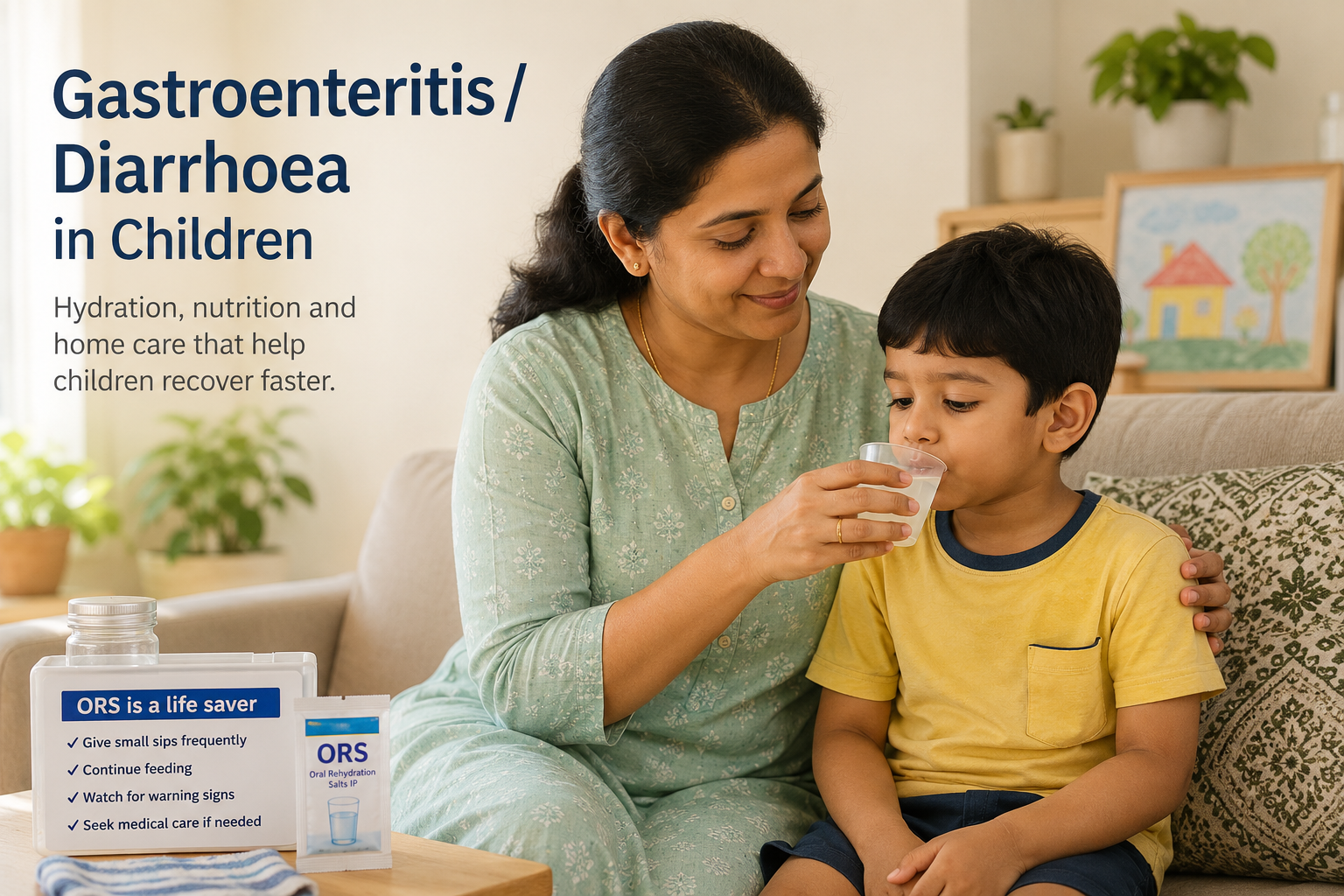
- Offer small, frequent sips, especially after vomiting. Tiny repeated amounts are often better tolerated than a large drink.
- Use commercially prepared ORS sachets or ready-to-drink ORS according to the packet instructions for mixing and storage.
- If the child vomits, pause briefly and restart with small sips when settled.
- Continue breastfeeding. Breast milk is still useful for fluid, nutrition, and comfort.
- Formula-fed babies and children with medical conditions should follow clinician advice if intake is poor or vomiting continues.
Food during diarrhoea
Most children can continue normal feeding as tolerated. There is usually no need for prolonged fasting once the child can drink and is interested in food.
- Offer simple home foods such as rice, dal, curd rice, khichdi, idli, banana, toast, potato, soups, and other familiar foods the child accepts.
- Keep portions small and offer more often if appetite is low.
- Avoid forcing food. Fluids and hydration come first when vomiting is active.
- Avoid very sugary drinks and very oily or heavy foods while the stomach is unsettled.
- Return gradually to the usual family diet as the child improves.
Avoid unnecessary antibiotics
A doctor may consider tests or specific treatment in selected situations, such as blood in stool, severe illness, travel-related illness, outbreaks, or high-risk children. This decision should be individualized.
Anti-diarrhoeal medicines: caution
- Do not use adult diarrhoea medicines for a child unless prescribed.
- Do not use old prescriptions or medicines shared by relatives.
- Do not combine multiple stomach medicines at home to "stop" diarrhoea quickly.
- ORS and hydration are the priority while arranging review if warning signs appear.
When to seek medical review
Seek medical review if your child is not improving, symptoms are worsening, or you are unsure about hydration. Review is especially important for babies, children with chronic illness, and children who cannot drink enough.
- Diarrhoea or vomiting is persistent or worsening.
- The child has fever with poor activity, poor drinking, or concerning symptoms.
- There is blood in stool or repeated mucus-containing stools.
- The child has repeated vomiting, poor feeding, or reduced urine.
- The child has significant tummy pain or you are worried about the child's appearance.
Red flags / when to seek urgent care
- Severe lethargy, confusion, hard to wake, or child appearing very unwell.
- Poor drinking, persistent vomiting, or unable to keep fluids down.
- Signs of dehydration: very little urine, no tears, dry mouth, sunken eyes, dizziness, or marked weakness.
- Blood in stool or black stool.
- Very young infant, especially with fever, poor feeding, vomiting, or reduced wet nappies.
- Severe abdominal pain, abdominal swelling/distension, or a hard painful tummy.
- Green or yellow-green vomit, repeated forceful vomiting, or concern for choking or poisoning.
- Your child is worsening quickly or you feel something is seriously wrong.
Preventing spread at home
- Wash hands well after toilet use, nappy changes, and before preparing food.
- Keep drinking water safe. Use clean utensils and freshly prepared food where possible.
- Clean vomit or stool spills promptly and wash soiled clothes separately when practical.
- Keep the child away from school or childcare while diarrhoea or vomiting is active, and follow local school or doctor advice about return.
Medical disclaimer
References
- Royal Children's Hospital Melbourne. Kids Health Info: Gastroenteritis (gastro). Accessed 19 May 2026.
- National Institute for Health and Care Excellence. Diarrhoea and vomiting caused by gastroenteritis in under 5s: diagnosis and management, CG84. Accessed 19 May 2026.
- World Health Organization. Diarrhoeal disease. Fact sheet. Accessed 19 May 2026.
- World Health Organization. Oral rehydration salts: production of the new ORS. Accessed 19 May 2026.
- American Academy of Pediatrics, HealthyChildren.org. Diarrhea in Children: What Parents Need to Know. Accessed 19 May 2026.
Last reviewed: 16 June 2026.
© Dr. Murali Gopal | For Patient Education Only This educational material is intended for parent and patient education. Reproduction, redistribution, or modification without permission is not allowed.
Medical review

Scan to open the latest online version